
































![1+1 FREE | FineSlice™ - Cuts What Scissors Can’t [Offer Ends Today]](http://quanolo.co.uk/cdn/shop/files/d210079baefb8baec1578f1fec4170f982c0ff80d45b958c27cedc5cde9018c7-500.gif?crop=center&height=475&v=1745786035&width=475)
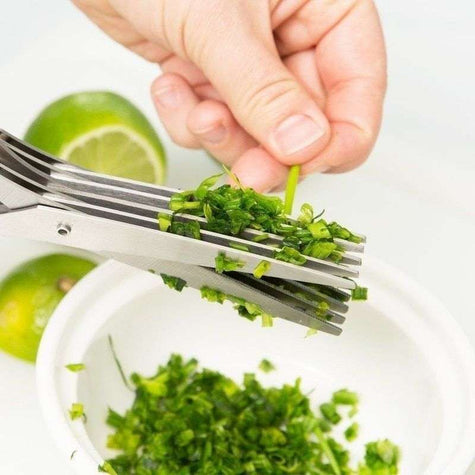











Table of Contents
- Why Quality Kitchen Tools Save Time Cooking
- The hidden cost of dull blades and flimsy handles
- How Ergonomic Design and Precision Cutting Reduce Manual Effort
- Best Kitchen Tools for Meal Prep That Cut Prep Time
- Durable Kitchen Utensil Materials: What Lasts and What Doesn't
- Essential Kitchen Tools for Small Spaces That Earn Their Drawer
- Cleaning and Maintenance Time-Sinks Most Cooks Ignore
- Professional-Grade vs Consumer Tools: A Cost-Benefit Breakdown
- Conclusion
- Frequently Asked Questions
Last Updated: September 15, 2026
Why Quality Kitchen Tools Save Time Cooking
Most home cooks blame their schedule, not their equipment, when dinner runs late. That is usually the wrong diagnosis. A dull blade forces you to saw, reposition, and apply pressure where a sharp edge would glide through in one motion, and those seconds stack up fast across a full meal.
The fix is rarely about cooking faster. It is about removing the small frictions that slow you down before the pan even heats up.
The case for upgrading your kit rests on a simple idea: quality kitchen tools do not just feel better, they compress the repetitive, low-value parts of cooking so your attention stays on the parts that matter.
The hidden cost of dull blades and flimsy handles
A dull knife is a time tax you pay on every ingredient. When a blade cannot slice cleanly, you compensate with force, sawing, and awkward repositioning, doubling the physical work for the same result. A flimsy handle compounds it: it flexes under pressure, so you grip harder and slow down on your third onion rather than your first.
The cost is cumulative: a cook who spends an extra 20 seconds per vegetable across six vegetables has lost two minutes before the stove is even on.
What most guides miss is that sharpness and handle rigidity are not separate features. A good blade on a weak mount still wobbles. The whole tool has to be built to transfer force cleanly, which is why guidance from the Food Standards Agency on safe food preparation consistently emphasises well-maintained, fit-for-purpose equipment in the kitchen.
How Ergonomic Design and Precision Cutting Reduce Manual Effort
Ergonomic design shapes a tool around the hand that uses it, so the work happens with less strain: a handle that fills your palm, a blade angle that lets gravity do part of the job, and controls where your fingers naturally rest.
Why repetitive tasks slow you down
Repetitive tasks slow you down because fatigue accumulates faster than most cooks realise. Chopping, peeling, and stirring are low-force, high-repetition actions, and once your grip aches, your pace and accuracy drop.
The mechanism explains why tool choice matters more than willpower. A grip that is too narrow forces your fingers to curl tightly; too wide a handle reduces control, so you compensate with wrist tension. Either way, a small, easily fatigued muscle group does the work, and once it tires, your body shifts to a slower, cautious movement pattern to protect itself. That shift is the slowdown, not laziness, but a protective response.
A well-shaped handle changes which muscles carry the load. When it fills the palm and the fingers wrap without pinching, force travels through the larger forearm and shoulder muscles rather than the small muscles of the hand, so the same cut takes less perceived effort. That is why handle diameter, taper, and texture matter as much as blade steel, a knife is a lever, and the handle is where it meets the body.
Why precision cutting compounds the saving
Precision cutting earns its keep in two ways. A tool that produces consistent slices in one pass removes the need to check, re-cut, and tidy up. And consistency changes how food cooks: evenly sized pieces reach the same internal temperature at once, so you are not fishing out underdone chunks while the rest turns to mush.
The compounding effect is easy to underestimate. If a consistent cut saves ten seconds per ingredient across eight ingredients, that is over a minute per meal, plus the corrective steps a bad cut triggers. Over a week of home cooking, the difference between a tool that cuts cleanly and one that does not is measured in tens of minutes.
Ergonomic, precise tools turn a tiring sequence into a smooth one, and smooth sequences are faster. The practical test is whether your hand stays relaxed through the twentieth repetition.
Best Kitchen Tools for Meal Prep That Cut Prep Time
The best kitchen tools for meal prep replace multiple manual steps with a single motion, cutting, slicing, and peeling tools first. Prep is where the bulk of your time goes, and the stage most easily compressed.
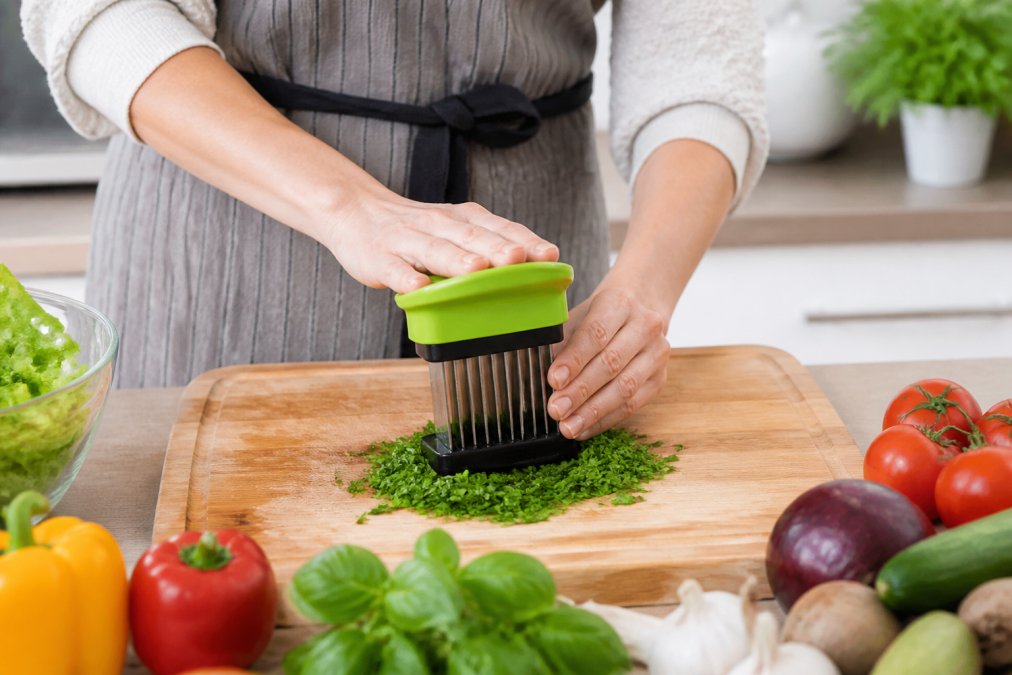
A few categories do the heavy lifting:
- Multi-blade scissors handle herbs, chives, and even paper in one snip, replacing a board-and-knife routine entirely. The CutKing™ Rapid 5-Blade Kitchen Scissors are built around an ergonomic handle and a sturdy steel rivet.
- Mandoline-style slicers deliver uniform slices without knife skills. The Multifunctional Vegetable Cutter ships with interchangeable hardened stainless steel blades and a safety guard.
- Electric slicers suit high-volume prep. The SliceEase Handheld Electric Vegetables Slicer Set is rechargeable and cord-free, with a brush attachment for cleanup.
- Automatic peelers remove the most tedious job of all. The SliceWave™ Automatic Rotating Fruit & Veggie Cutter peels potatoes, apples, and carrots in seconds.
- Garlic crushers eliminate chopping and the lingering smell on your hands. The GarlicCrush™ Simple Garlic Crusher is made from stainless steel.
Durable Kitchen Utensil Materials: What Lasts and What Doesn't
Durable kitchen utensil materials fall into two camps: metals that hold an edge and resist corrosion, and food-grade plastics or silicones that flex without cracking. The right choice depends on the job, not on which material sounds more premium.

Stainless steel vs silicone: which suits which job
Stainless steel wins wherever force, sharpness, or heat is involved (bsigroup.com). It holds an edge, resists rust, and tolerates dishwasher cycles, which is why blades, crushers, and structural components are almost always steel. The trade-offs are weight and the fact that poor-quality steel will pit or bend over time.
Silicone wins where flexibility, grip, or scratch-free heat resistance matters. It will not damage non-stick surfaces and does not conduct heat. Where it falls short is rigidity: a silicone blade cannot slice, only scrape or fold.
| Material | Best For | Avoid When | Typical Lifespan |
|---|---|---|---|
| Stainless steel | Blades, crushers, structural parts | Weight is a concern | Years with care |
| Food-grade silicone | Spatulas, grips, sealers | You need a sharp edge | Several years |
| Hardened ABS plastic | Housings, storage, guards | High heat is involved | Moderate |
| BPA-free composite | Lightweight everyday tools | Heavy force is required | Moderate |
A common mistake is buying an all-steel tool for a job that needs flex, or an all-plastic tool for a job that needs an edge.
Essential Kitchen Tools for Small Spaces That Earn Their Drawer
Cleaning and Maintenance Time-Sinks Most Cooks Ignore
A few habits cut this time sharply:
Professional-Grade vs Consumer Tools: A Cost-Benefit Breakdown
The replacement cycle is the real cost
Where the premium pays off, and where it does not
A simple way to decide
Conclusion
Frequently Asked Questions
Which kitchen utensils are the most durable for daily use?
Stainless steel and hardened stainless steel blades hold up best to daily use because they resist bending, corrosion and staining. Look for tools with food-grade stainless steel cutting surfaces and reinforced handles, such as the CutKing™ five-blade scissors at £19.97, which use sturdy steel rivets and an ergonomic grip. Silicone works well for spatulas and heat-sensitive tasks but should not replace steel where precision cutting matters. Dishwasher-safe designs also reduce wear from hand-scrubbing over time.
Do high-quality kitchen tools actually make food taste better?
They do not add flavour directly, but they change how consistently you cook. Sharp blades cut cleanly rather than bruising herbs and vegetables, which preserves texture and reduces bitterness in items like basil or garlic. Even heat distribution and accurate measuring, such as the SmartMeasure™ four-in-one cup at £29.00, keep ratios consistent so sauces and bakes turn out the same each time. Consistency is what most home cooks mean when they say a dish tastes better.
How do ergonomic kitchen tools improve cooking speed?
Ergonomic handles reduce the grip force and wrist strain needed for repetitive tasks like chopping, peeling and crushing. When your hands tire less, you keep a steady rhythm instead of pausing to rest. Tools that combine several actions into one, such as the GarlicCrush™ crusher at £17.99 or the SliceWave™ automatic peeler at £29.95, remove entire steps from meal preparation. That is why quality kitchen tools save time cooking on longer sessions especially.
What are the signs that it is time to replace your kitchen tools?
Replace tools when blades no longer hold an edge after sharpening, when handles wobble or crack, or when rust appears on stainless steel surfaces. Silicone that has hardened, discoloured or developed a sticky film should also go, since it can trap residue. A dull peeler or slicer forces you to press harder, which slows prep and raises the risk of slips. Upgrading a single failing tool often restores more speed than buying several new gadgets at once.